

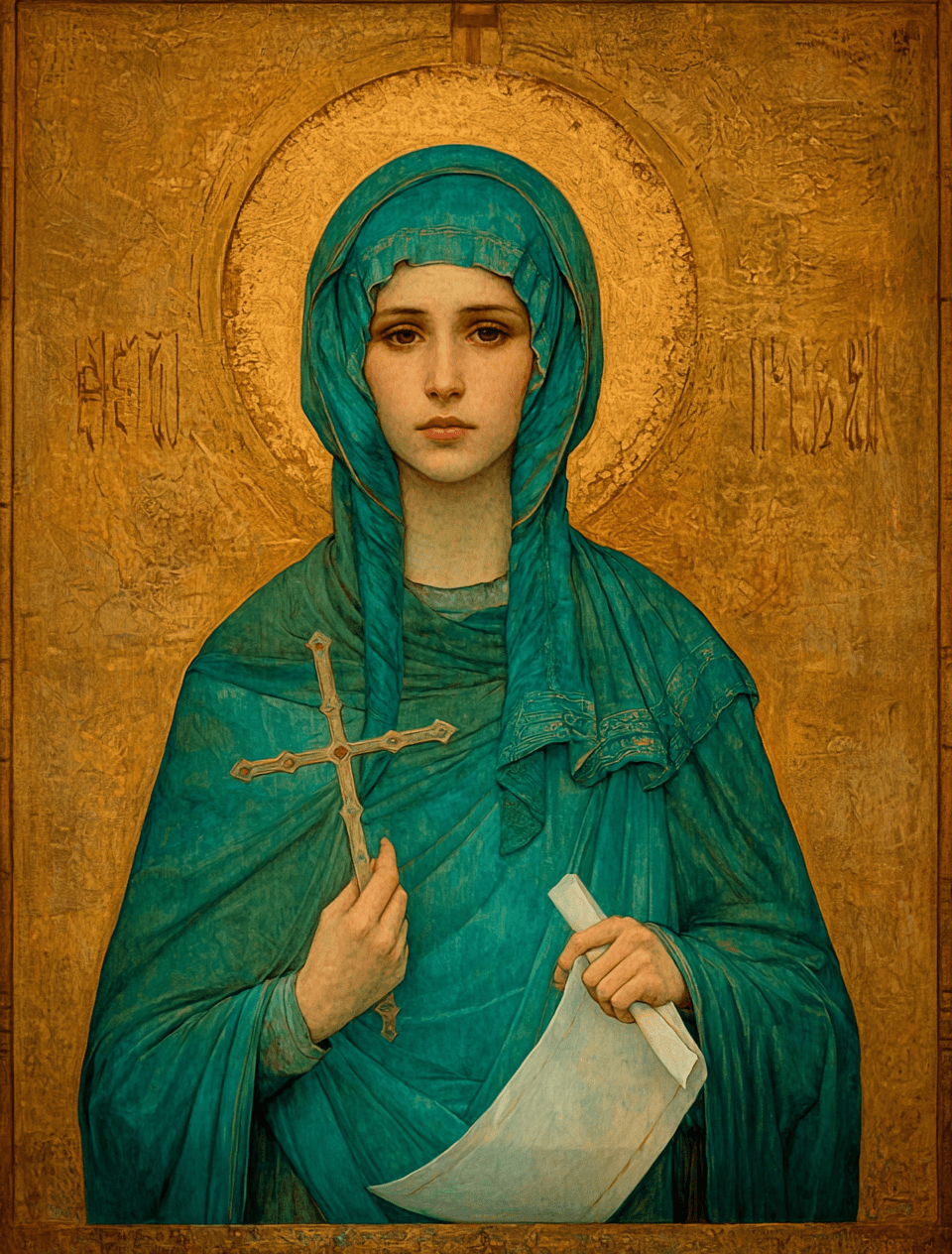
The Life of Saint Tatiana of Rome (3rd century)
In third-century Rome, when the empire stretched from Britain to Babylon and its gods demanded blood on marble altars, a young woman named Tatiana made a choice that would change everything. She was born into privilege—her father held rank, wore the purple-bordered toga of Roman nobility, served in government. But he had also made his own dangerous choice: he followed the strange new sect that worshiped a God who had died like a criminal and claimed to have conquered death itself. He raised his daughter in this secret faith, and Tatiana grew up knowing two worlds—the glittering surface of imperial Rome and the hidden gatherings where Christians broke bread and remembered their executed king.
When she came of age, Tatiana refused every marriage her father’s position could have secured. She wanted neither husband nor children nor the comfortable imprisonment of a Roman matron’s life. Instead, she became a deaconess, one of the women who served the church—caring for the poor, instructing new converts, assisting at baptisms. It was dangerous work in a city where the emperor’s spies watched for signs of disloyalty to Rome’s ancient gods. But Tatiana had found her calling, and she walked into it with open eyes.
The emperor Alexander Severus was young, inexperienced, and easily influenced by advisors who feared Christianity’s spread. When persecution intensified, Tatiana was among those seized and dragged before the magistrate. He offered her the choice given to all Christians: burn incense to Rome’s gods or face punishment. It seemed such a small thing—a pinch of incense, a few words, survival. Tatiana refused. Not with trembling or tears, but with the calm certainty of someone who knew exactly what she was choosing and why.
What followed tested everything she believed about the nature of reality itself. The magistrate ordered her brought to the temple of Apollo, thinking the gods’ presence might break her will where argument had failed. But when the soldiers dragged her before Apollo’s statue, something unprecedented happened—the marble god shattered, its fragments scattering across the temple floor. Whether earthquake or divine intervention or the sheer force of Tatiana’s conviction, the result was the same: Rome’s god lay broken at the feet of a young Christian woman. Several priests, witnessing their god’s destruction, immediately declared faith in Tatiana’s God. They were executed on the spot.
The magistrate, terrified and enraged, ordered escalating tortures. Tatiana endured them all—not through gritted teeth or desperate prayer for deliverance, but with a mysterious joy that unnerved her torturers more than screaming would have. Witnesses reported that she sang. When they finally beheaded her outside the city walls, she went to her death as if to a wedding feast.
The early Christians remembered Tatiana not as a victim but as a victor—someone who chose her path fully, knowing the cost, and walked it without flinching. She reminds the church that faith is not passive acceptance but active choice, not withdrawal from the world but engagement with it on terms that matter. Her feast day celebrates not her suffering but her courage: the courage to know who she was, to refuse the comfortable lie, to stand before power and say simply, clearly, without apology: No. And then to face whatever came next with a song on her lips.
Keywords: Tatiana of Rome, courage, third century, deaconess, martyrdom, choice, Apollo, early church, persecution, witness
 The Greater Horizon